
A Month in Villefranche-sur-Mer
Living for a month in Villefranche, I took some time to learn its history, and discover the coastal gems of neighboring charming villages on the Côte d'Azur.
Kristina Jensen
9/13/20258 min read
Discovering Villefranche
Checking in, and checking it out. Having visited here briefly last year, I knew I was in for a real treat. I met up with Shelly, the owner of the apartment, around 4pm. Aptly named “Artist’s Atelier” (Artist’s Studio) its décor pays homage to the local artists of this charming fishing village. The apartment is on Rue Volti, named after the town’s most famous resident artist, Antoniucci Volti (originally from Italy).
A Window Onto History
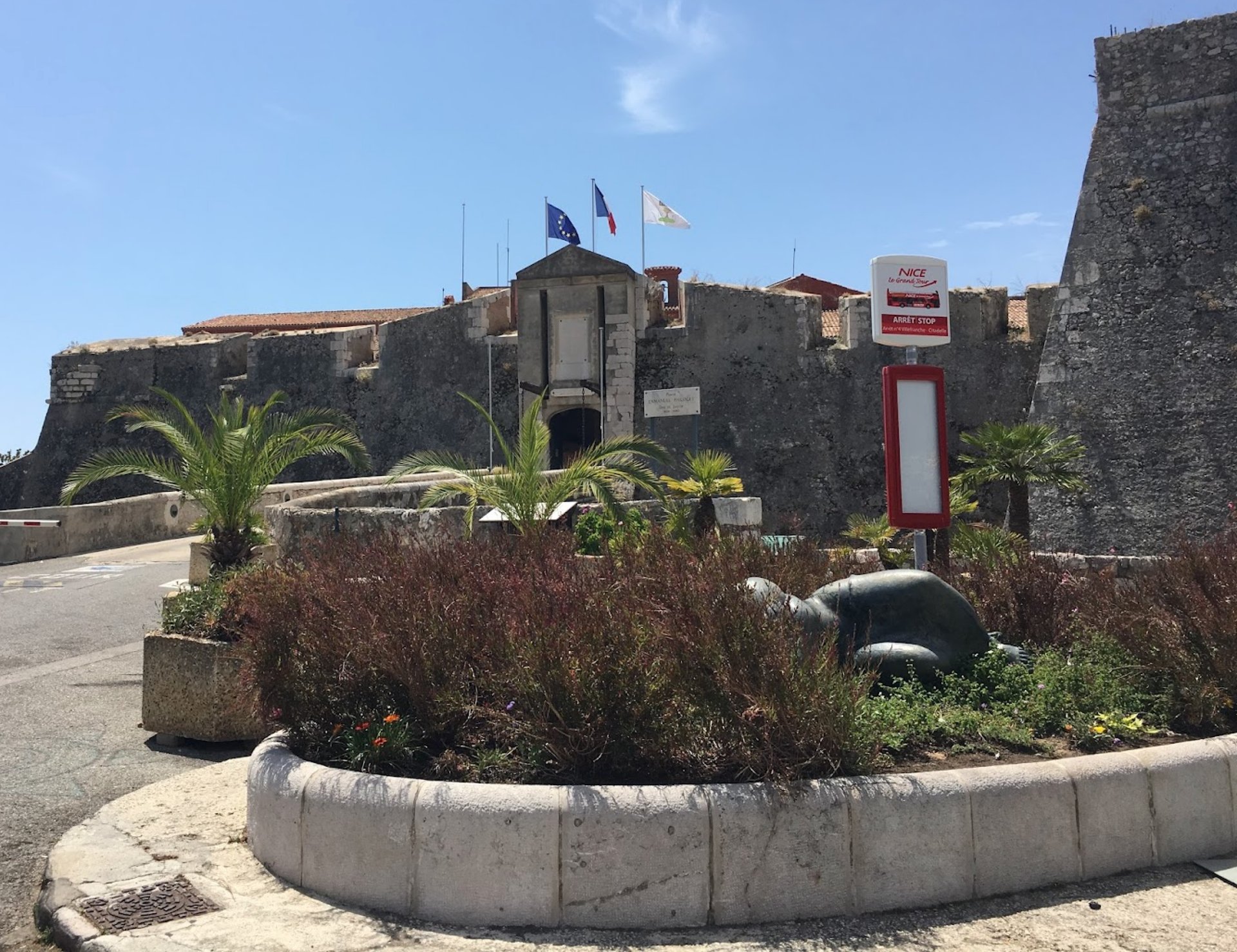
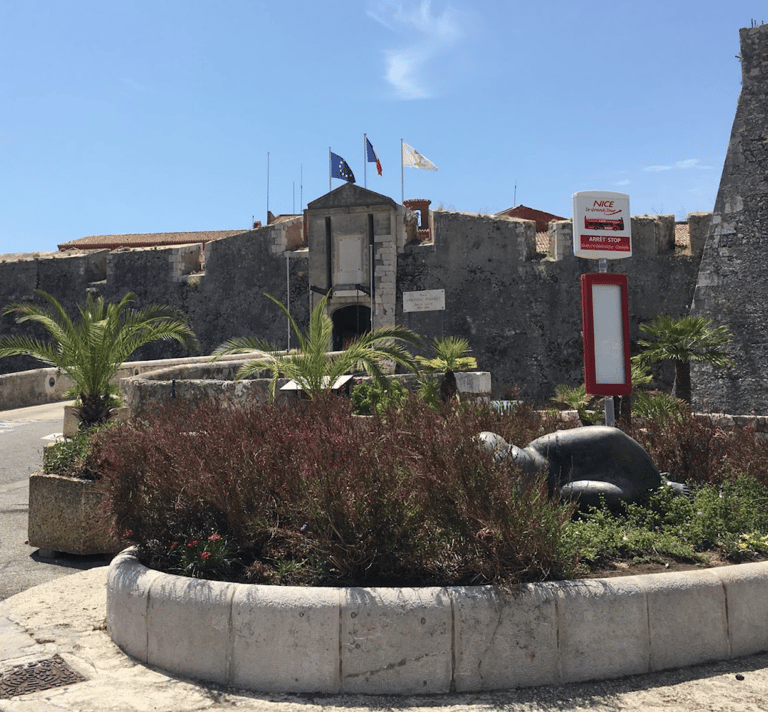
To set the historical scene, picture the ride at Disneyland: Stone forts, buccaneers and soldiers fighting, and burning towns and villages. This is that fort, those soldiers were here, and the town was constantly threatened by pillaging pirates. “Pirates of the Mediterranean” if you will.
I won’t go to deep into the history here, but essentially, the Citadel served as protection; a stronghold for the citizens of the village, tended by the several legions of armed soldiers. Many of the homes in fact, were built higher up on the hillsides first, as the area close to the water was too dangerous. Consequently, many of the inhabitants (of the period) fled the village. So many years later, after the oppression faded out and the town returned to peace (changing hands several times under various rule), the town was eventually renamed “Villefranche”. Roughly translated, it means “tax-free town”, where in fact, no taxes were imposed - in hopes of drawing more people back to the area.










Chapels & Churches
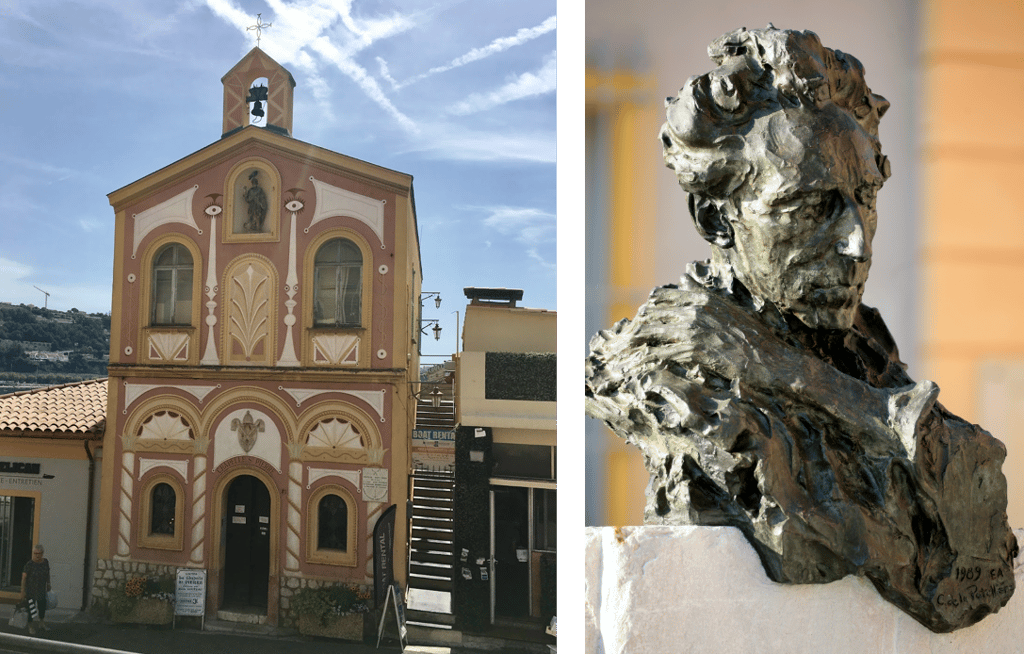
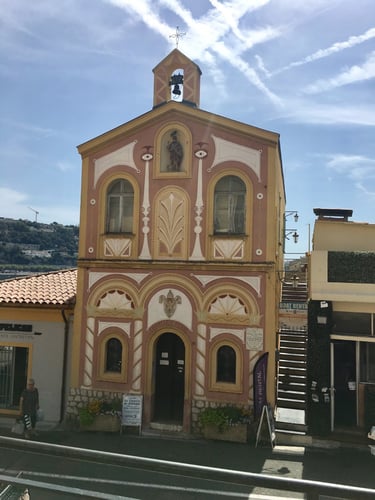
Walking on, we see the famous 16th-century Chapelle Saint-Pierre. The building itself was made famous by Jean Cocteau (writer, designer, artist and filmmaker), who painted its facade in 1957. He is revered by the French as a cultural icon. It was Cocteau who brought world-wide attention to this little seaside village.




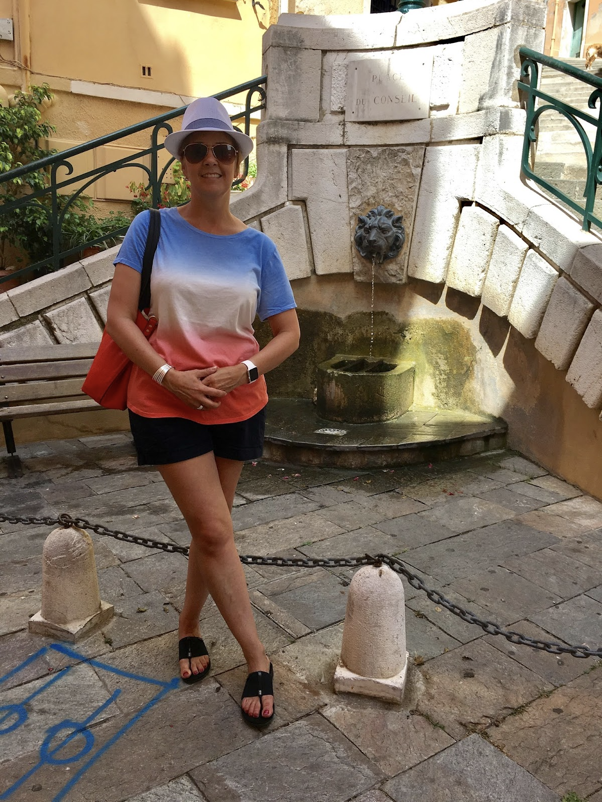

Many centuries earlier, when the villagers were under siege, they would secretly meet at this fountain to share their concerns of current events. I gathered that this is, in part, from where expressions like “watercooler talk” derived.
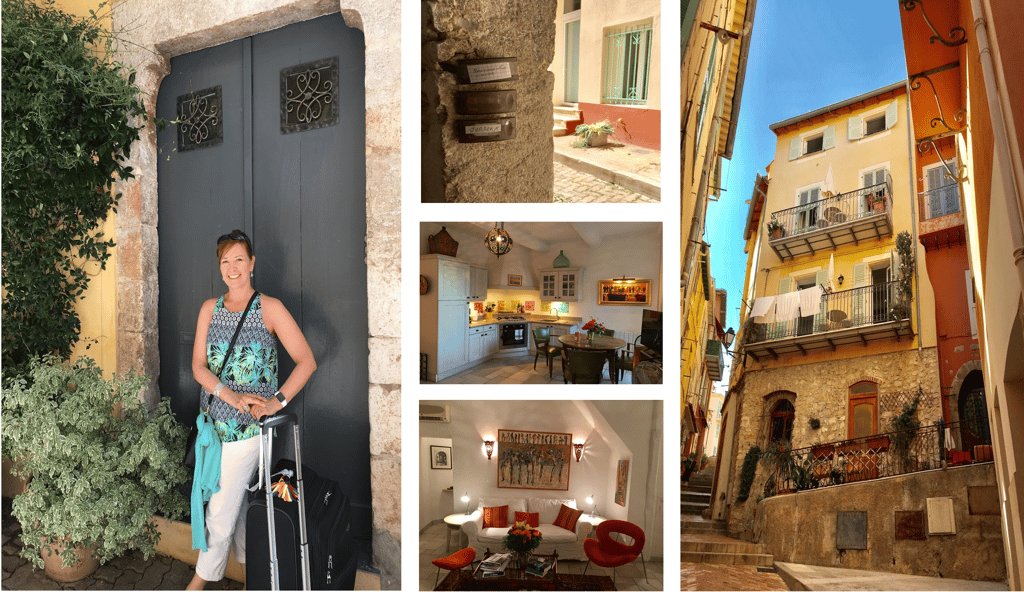
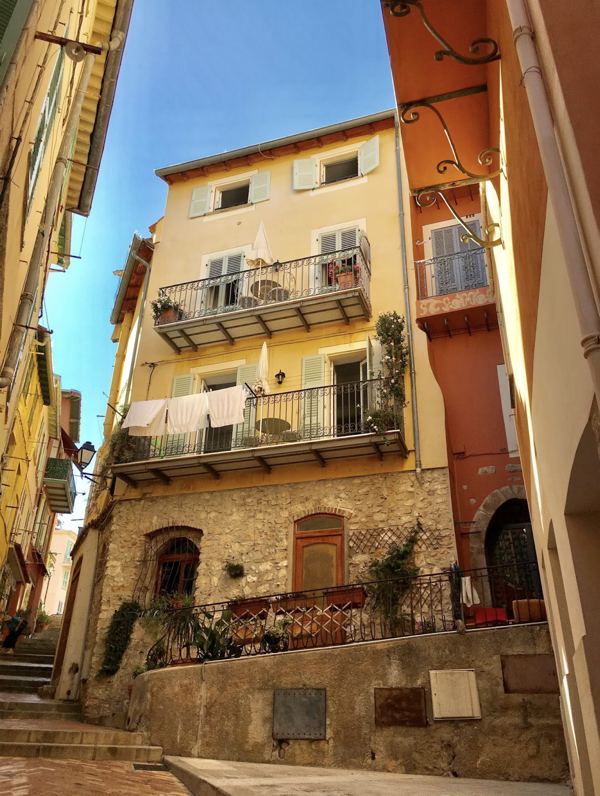
There are three apartments in the building, and the building itself is one of the oldest in Villefranche, dating back to the 17th century. The exposed beams are original to the apartment.
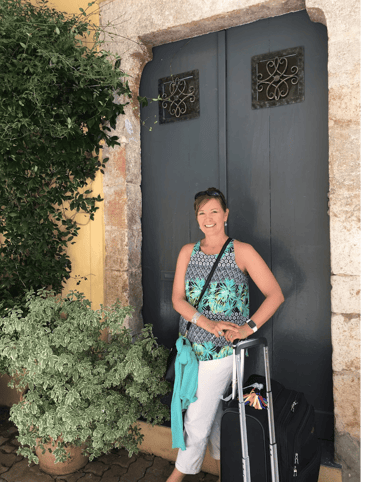
Seeing my name on the door was a nice touch, and made it feel like home. The apartment is perfect for someone like me - a single student (of the Institute) who needs a comfortable place to crash after classes.
The studio includes all the amenities for self- preservation (a bottle of local Rosé had already been chilling in the fridge for my arrival). To complete the picture, Shelly had even brought a fresh spray of flowers from a local florist to add to the lively, lived-in, lovely look of this place du jour. C’est incroyable.
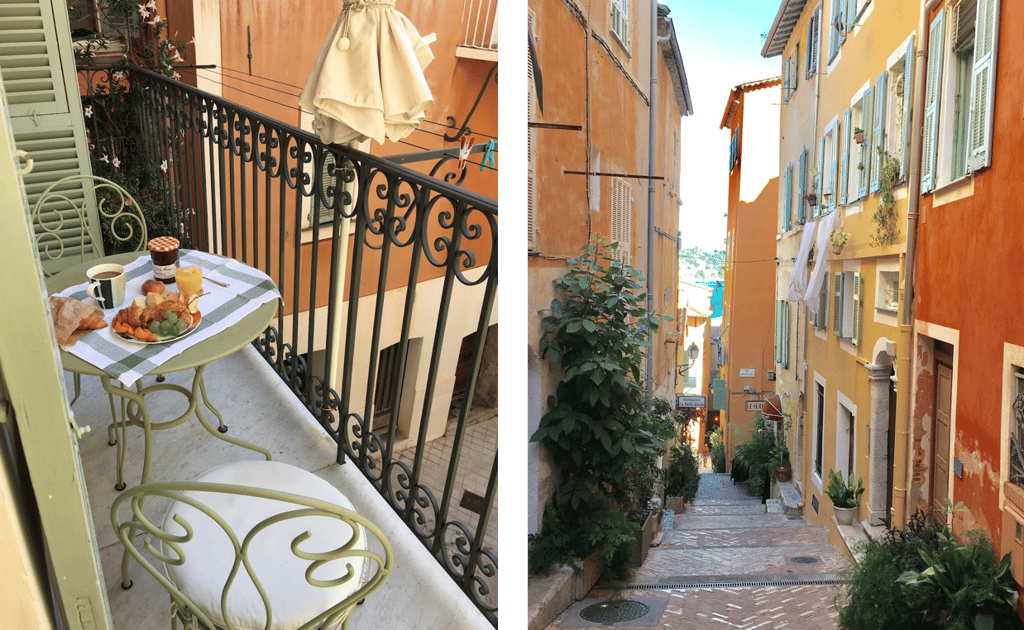
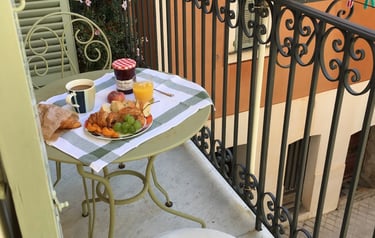
But of course, the pièce de resistance, is the balcony. There are two sets of French doors leading out onto “le balcon”. The perfect spot to have breakfast. From the back of the building, fresh towels hang from the “french laundry” lines over my railing. Before the month is over, I too, will be airing more of my laundry.
The next day I spent exploring the town, and checking out all the little nooks and crannies that this quaint French village had for me to discover. In the meantime, Shelly took extra time to make sure I was well- settled. She showed me around the town a bit, including walking with me along the path to the Institute so I would know the way with ease on Day 1. Read more about the French language Institute in French by Total Immersion: L'Institut de Français.
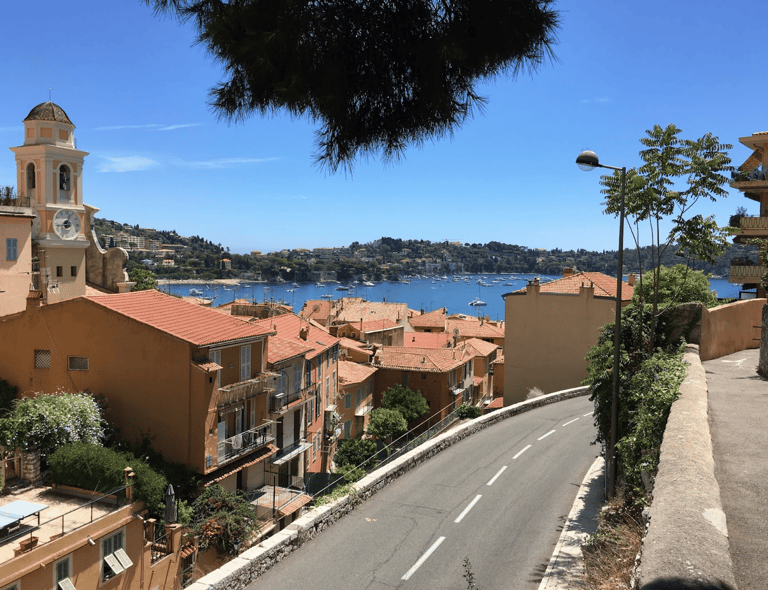
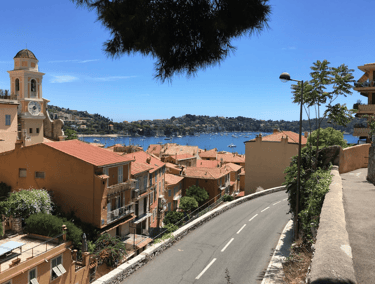
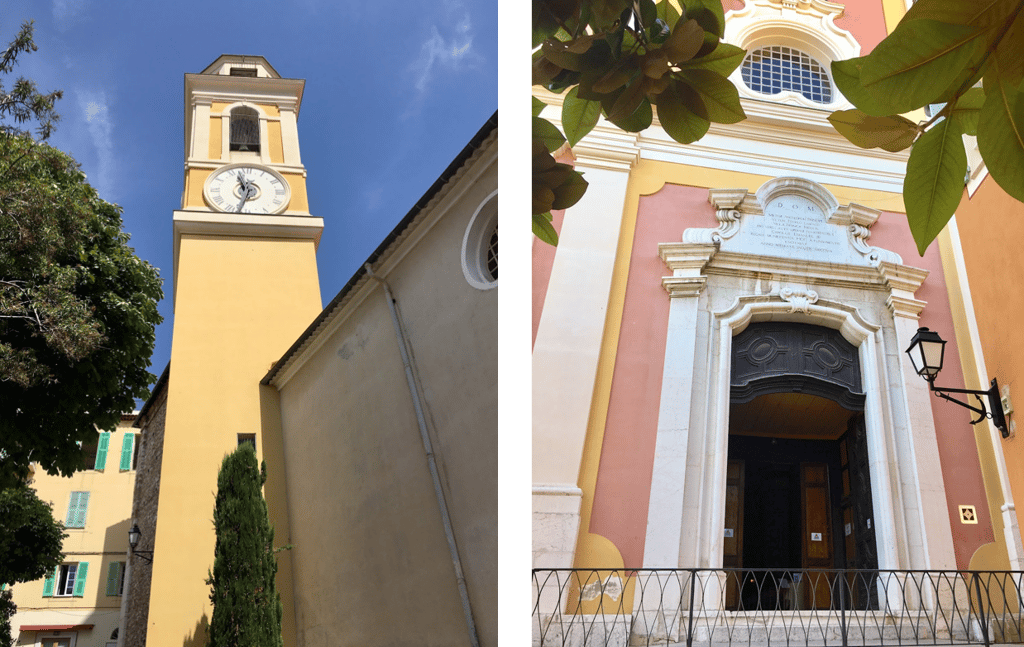
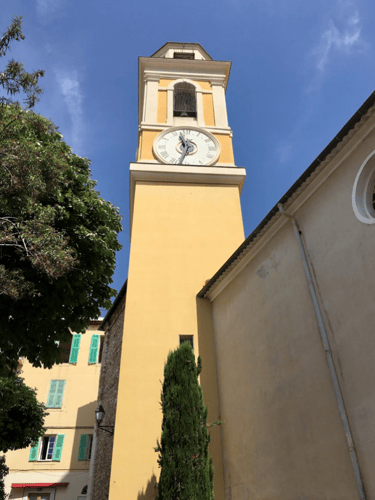
The bell tower of St. Michael’s Church (shown left) rises above the rooftops of the old town); the church is right around the corner from my apartment. The view is indescribably beautiful.
Sunday, I wandered out of my studio for the first time on my own to check out the town. I wanted to explore, but I also knew I couldn't come back empty-handed. I had to do some shopping.
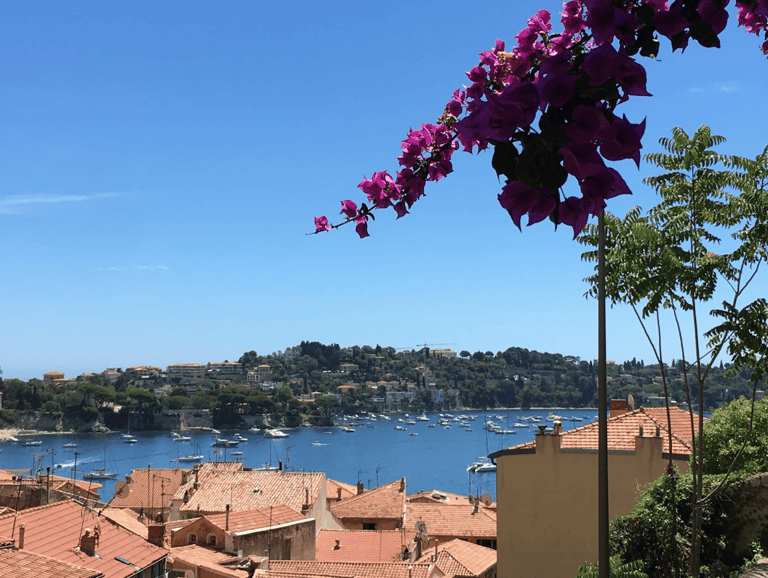
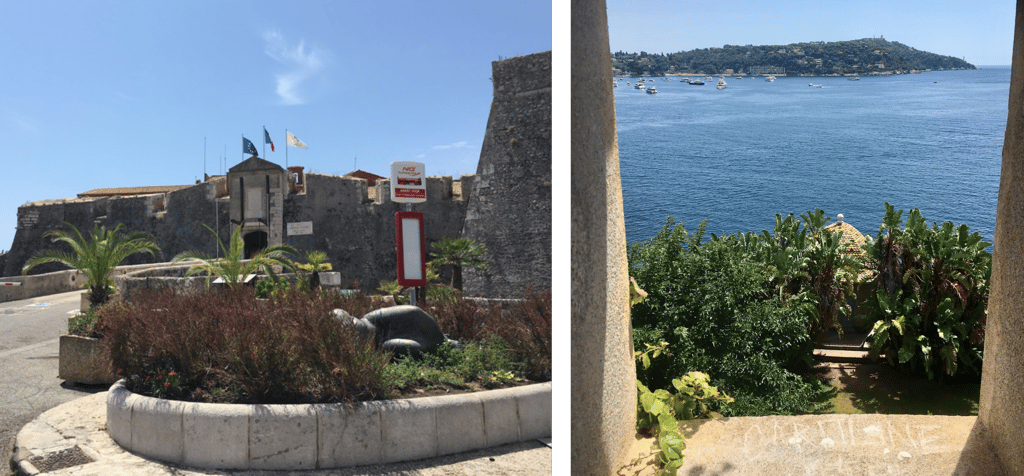
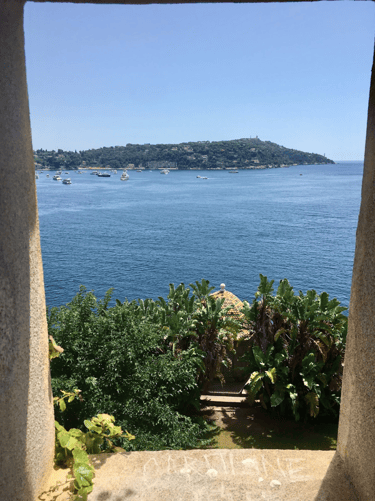
I walked toward the center of town, and happened upon a sidewalk market. I was able to talk with some of the vendors, one in particular, at length in French. I found a few treasures, then continued on to find a winding foot path with the most amazing, but hidden view (a secret hideaway only the locals seem to know about). It led me all the way around the Citadel (the old fortress stronghold once governed by the Duke of Savoy), surrounded by that infamous bay view.
There are lots of bakeries, the key is knowing the “best” one. I found a Boulangerie just down the steps around the corner. There’s also a Casino there, where I spent some money. (No, not to gamble - “Casino” is the name of the local grocery chain of markets). I brought my extra bag to stow my staple foods and was on my way.
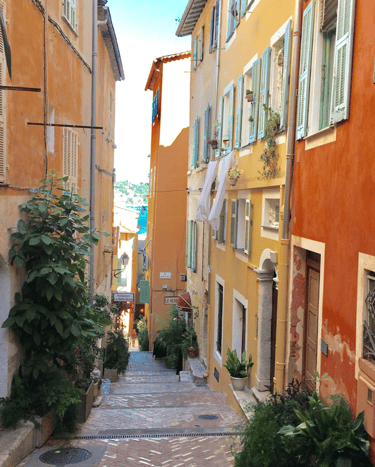
From where I sit just outside the French doors, I can look down the steps of Rue de May. Just beyond the first narrow intersection is the most popular row of markets, restaurants, and boutique shops on Rue du Poilu, where many townspeople (but mostly tourists in the summer) like to shop.
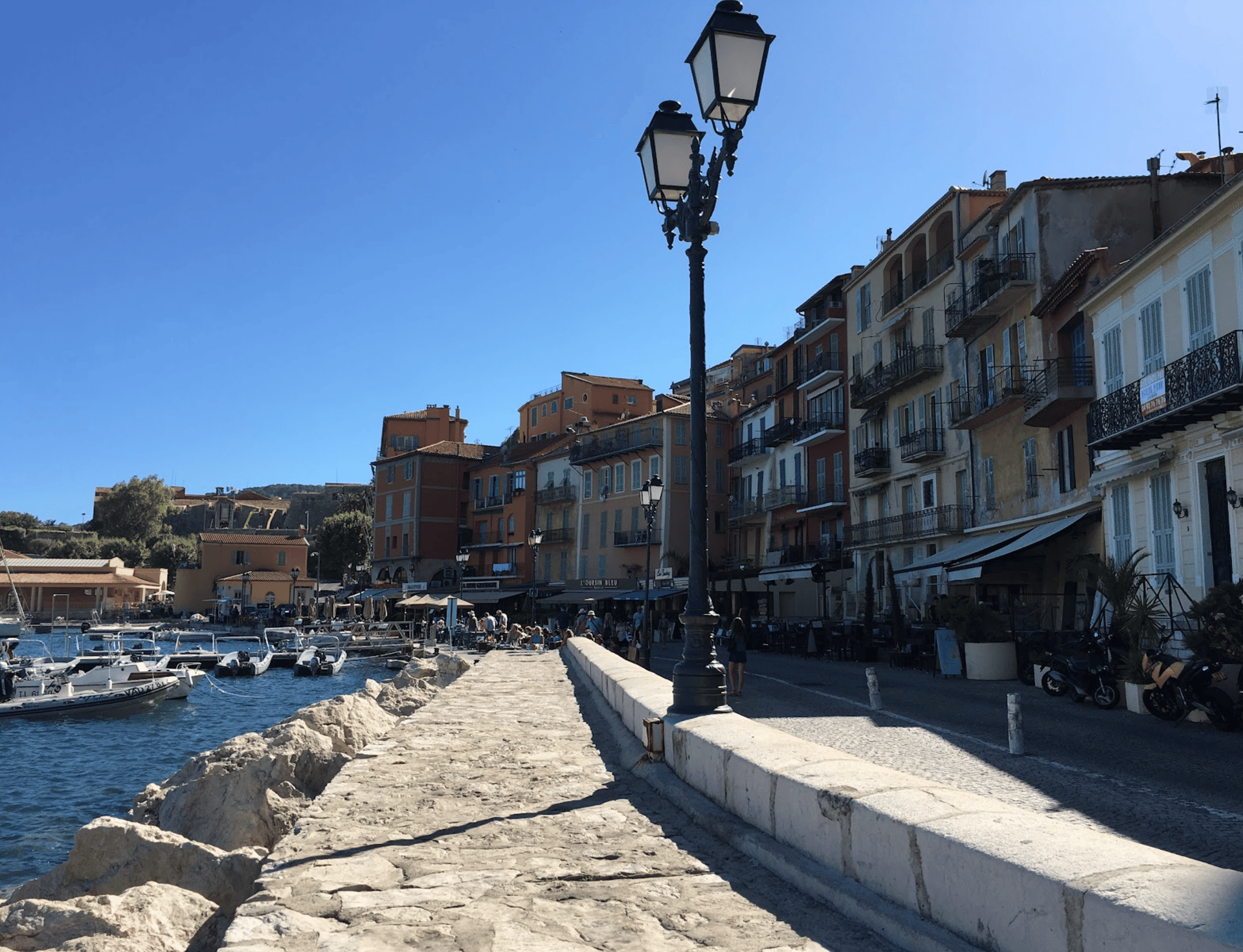
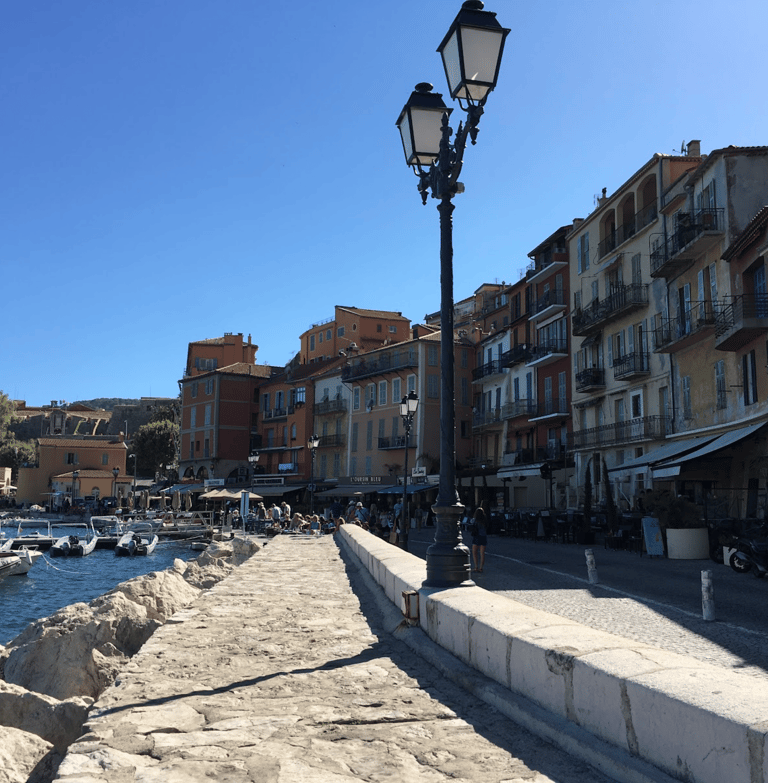
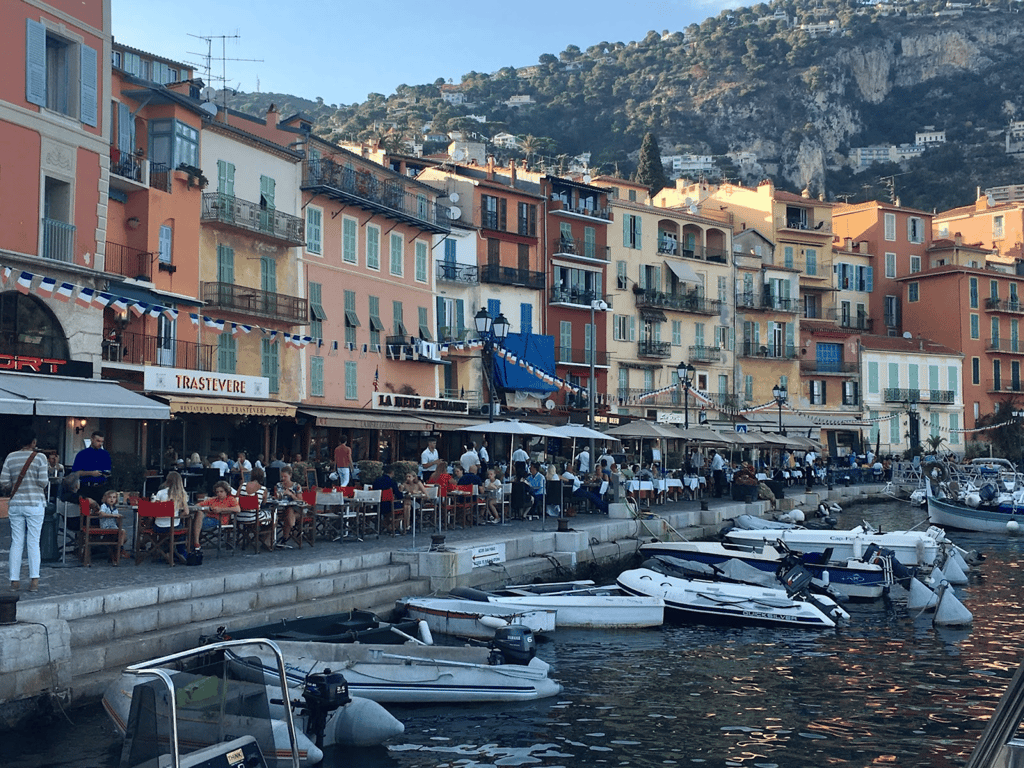
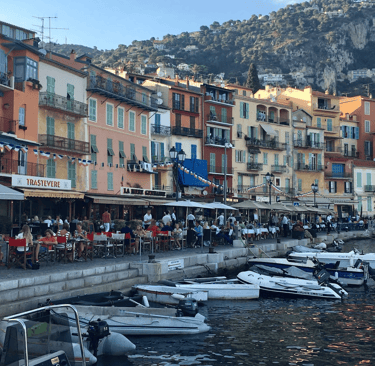
Continuing on strait leads to a narrow passage - through 400-year-old arched tunnels - over the final tier of cobblestone steps, opening up to the waterfront, or “la bord de la mer”. This is where the action is during the day. It’s buzzing with posh seaside bistros and upscale restaurants; and for the younger, sporty crowd of beachgoers - snorkel gear/beach shops, and local hangouts.
This bay in Villefranche has played a part in over 150 films over the years. But perhaps this seaside scene is best known for its role in the James Bond film “Never Say Never Again” with Sean Connery. And no wonder, it’s got all the genuine european charm, yet remarkably, still unspoiled by tourism.
These buildings even served as inspiration for the film set shown in the stunt car show “Motors...Action!” at Disney’s Hollywood Studios in Disney World, Florida. (They’ve since torn it down to make room for Star Wars land, but still exists in Disneyland Paris.)
Today, the Citadel now serves several purposes: A museum for housing original art works and sculptures by artists like Volti, Max Cartier, and Roux (a collection of porcelain figurines from the Middle Ages depicting actual events and battle scenes). It’s also home to “Hȏtel de Ville” an exclusive hotel, and an outdoor theatre for concerts and events.
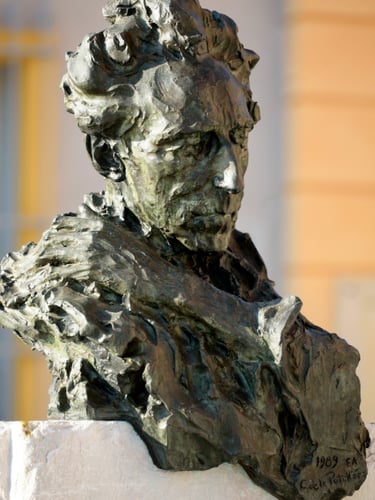
A bronze bust of Cocteau faces the harbor, and under it, a plaque inscribed with his now famous quote, reads: “Quand je regarde Villefranche, je vois ses jeunes fassent les hommes qu’elle ne change jamais” (When I see Villefranche, I see its young faces of men which never change.) He felt as if one can stay young living in a place like this.
In the years that followed, many actors, aspiring artists, and cultural enthusiasts alike started coming to Villefranche.
There are lots of public water fountains (at least four that I know of) around town, but this one with the lions head is the oldest, and most famous.
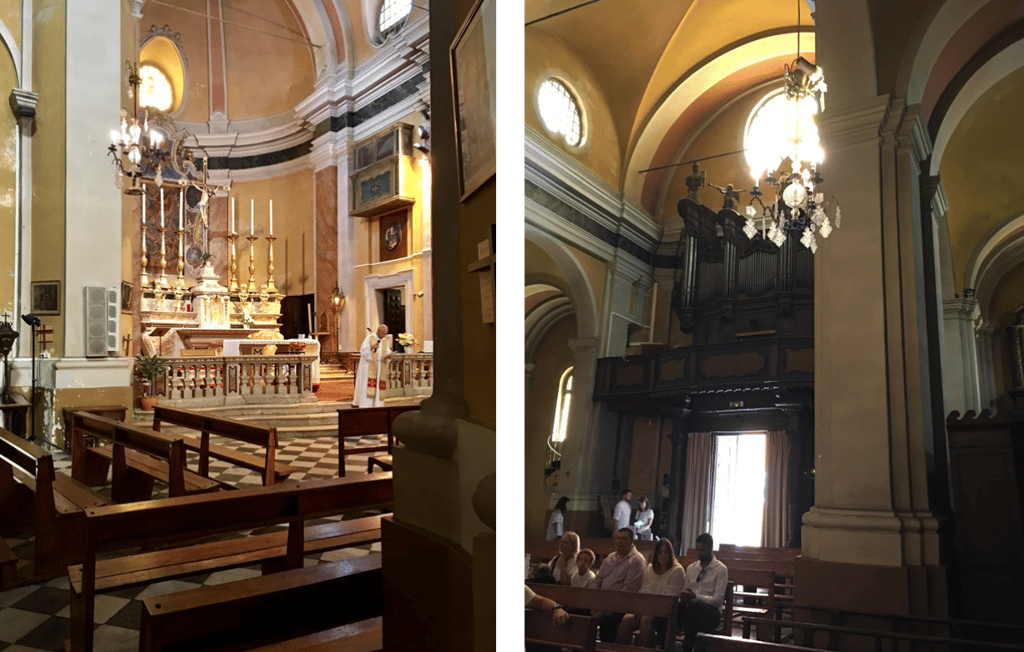
On Rue Volti is the church St. Michel. This is the bell tower that I hear every morning and evening from my apartment, which is practically around the corner. (Even as I write this, the bells are chiming.) Built in the 1750s, the Baroque-Italian style architecture paid particular attention to the classes, depicting social stations on the exterior décor and architecture of the building.
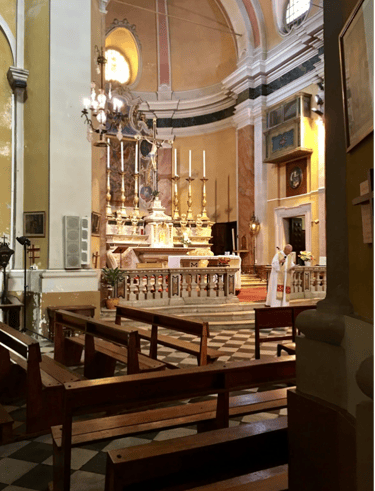
When I visited, there was a service in session. Facing the back, I saw the oldest pipe organ in all of the French Riviera. And much of what appears as marble columns and original stonework is actually trompe-l’oielle (not seen in this photo, but it's on the columns along the sides & altar).
On closer inspection, sure enough, I saw that the rich dark “marbelized” areas and columns are painted-on lines over a (marble-colored) background (shown around the altar). But it is of course, Louvre-quality artistry. This was because the town was very poor, but also did not want to attract plunderers, so artists were used to create a rich facade with an interior worthy of a holy church, but without the expense (and risk) of costly materials.
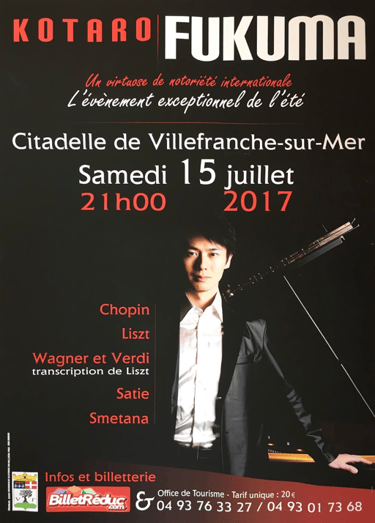
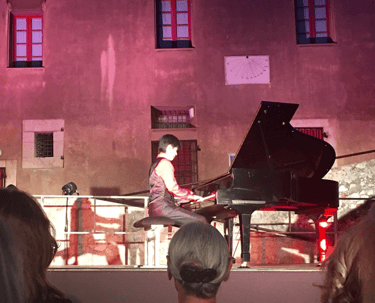
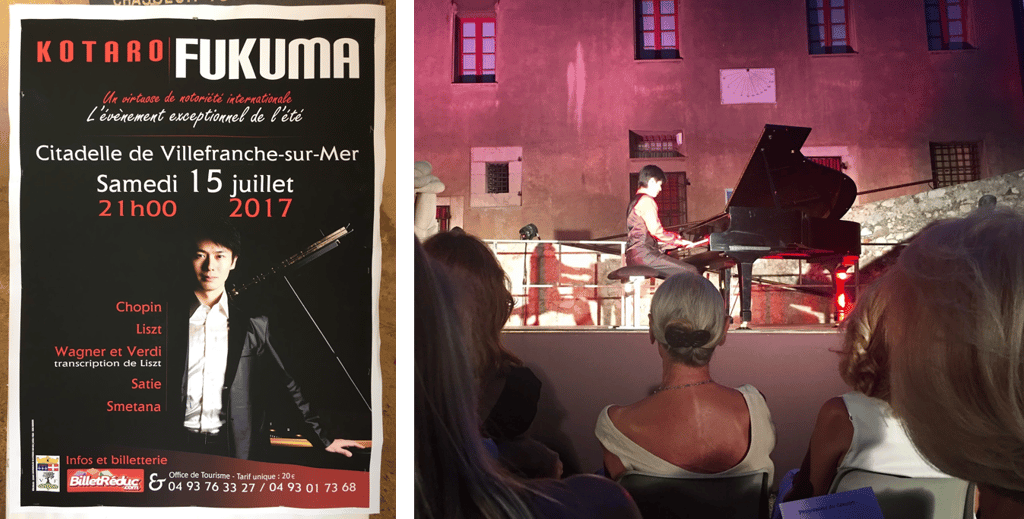
In fact, Saturday evening, I attended a concert at the Citadel to see the world-renowned international pianist Kotaro Fukuma. His performance of popular classical pieces was nothing short of perfection. He plays so delicately, and with so much emotion. It was quite moving, particularly against the backdrop of the stone walls, uplit with a palate of subtle changing colored lights.

At intermission, they served champagne. Again, I’m quietly taken aback by the ambiance and experience of it all. He even ended with playing a few French classics.


4th of July... in France?
After class, my friend Karen suggested we go for a drink, someplace with a waterfront view. What a great idea. The wine here, I quickly realize, is the perfect antidote for immersion anxiety.
While we chatted and discussed the day, we were suddenly interrupted by a sidewalk 4th of July celebration happening right across the street.

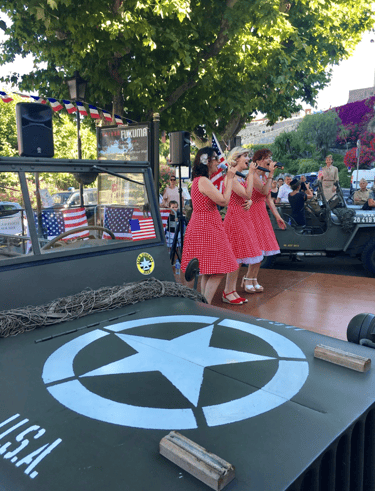
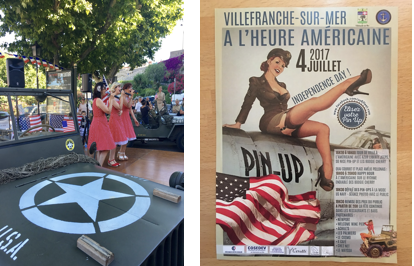
Turns out, every year Villefranche honors the service and support from American forces that aided France during WWII by putting on a USO-style show. What a nice surprise!
...And what a nice way, fitting for the holiday, to end a very stressful day. A little bit of “home” away from home :-)



Explore and roam for more.
© 2026. All rights reserved.


Created by KCJ Web Designs