
Artists' Paradise
Touring the towns of world-renowned artists Chagall and Renoir paints a whole new perspective on life and how they saw it, lived it, and captured it in their work.
Kristina Jensen
10/4/20255 min read
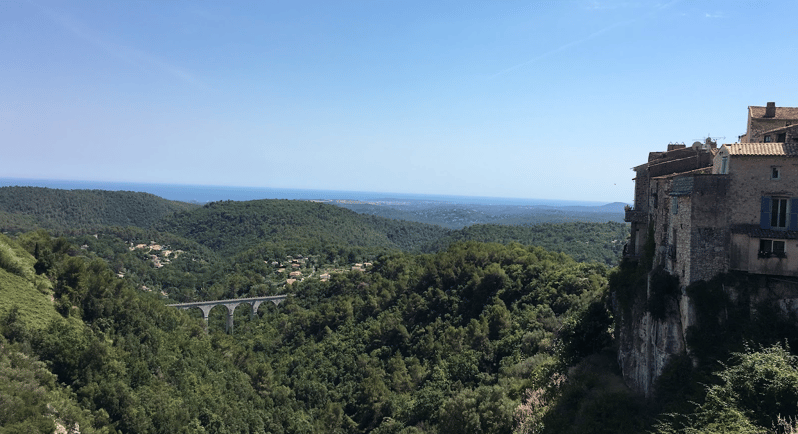
Our first stop was to Saint-Paul-de-Vence. Here, the Maeght Foundation, a unique former home dedicated to exhibiting Modern Art, displays pivotal period art including works by Marc Chagall.
Chagall's Saint-Paul-de-Vence
The gardens featured sculptures that interact with the water and landscape - very unusual and expressive, but often misunderstood.
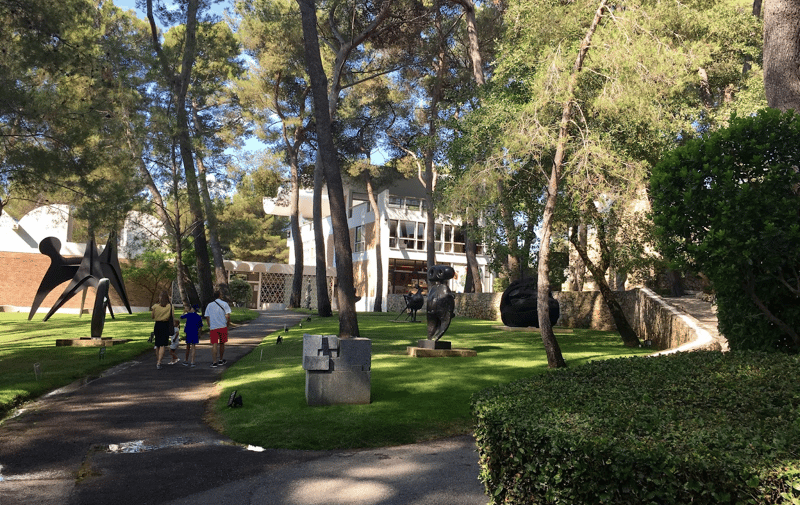
Saint Paul-de-Vence is best known as one of the oldest medieval towns on the French Riviera. The medieval village itself dates back to the 1300s, when the Counts of Provence managed the area and bestowed many privileges on Saint Paul to govern the region. He was charged with protecting its borders from surrounding threats, particularly when Nice was relinquished to the Duke of Savoy.
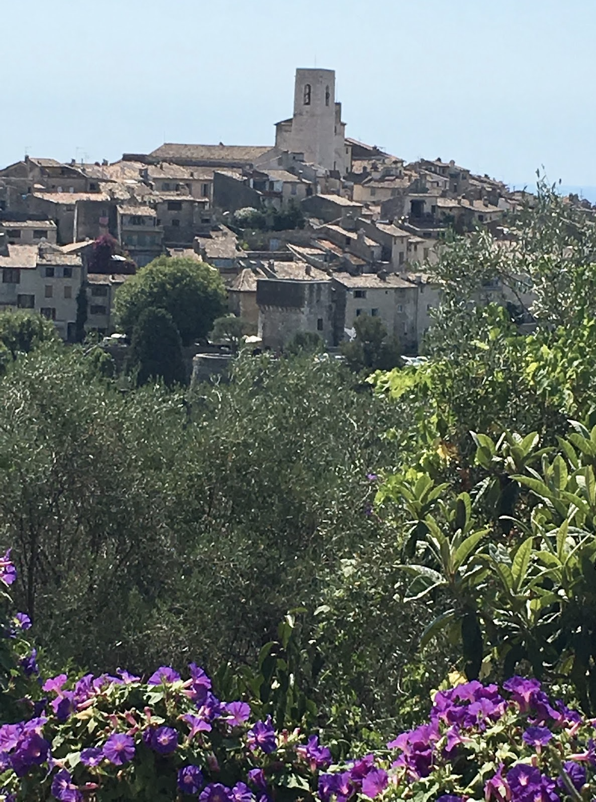
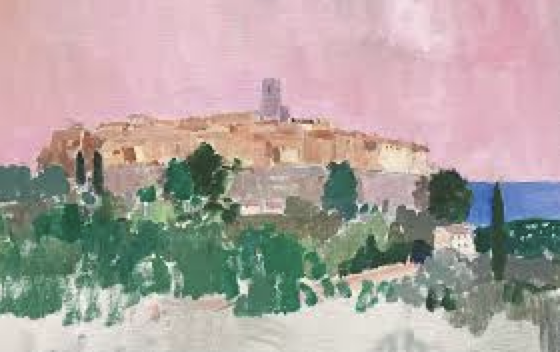
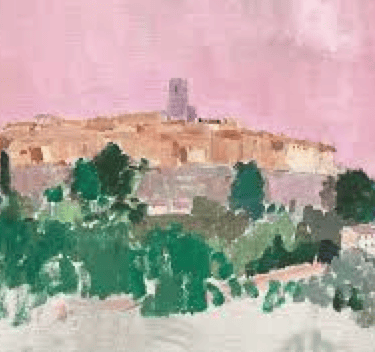
This view has been featured in many paintings, particularly by Chagall who frequented the area. This vantage point is where he stood to create those paintings.
Today, the village of Saint-Paul-de-Vence is one of the major tourist attractions in the Provence region, and the French Riviera.
Chagall, St Paul de Vence. Marc Chagall lived here for nearly 20 years. He painted this view repeatedly and the silhouette of the town is often found in the background of his paintings.
Inside the rampart walls now house various galleries, local artisan boutiques, and restaurants, along with the church and a hotel.
I was taken aback by how similar it seemed to the village at Èze - the architecture, the narrow passageways, the shops and galleries - definitely picturesque, and worth a visit when in the South of France.
In mid-life, Chagall traveled throughout France and the Côte d'Azur where he enjoyed these landscapes with their colorful vegetation, the blue Mediterranean Sea, and the mild weather. He made repeated trips to the countryside, taking his sketchbook, before deciding to make Saint Paul de Vence his home. So to see it through the eye of an artist, from Chagall's point of view, I can understand why he had such an attraction to this place.
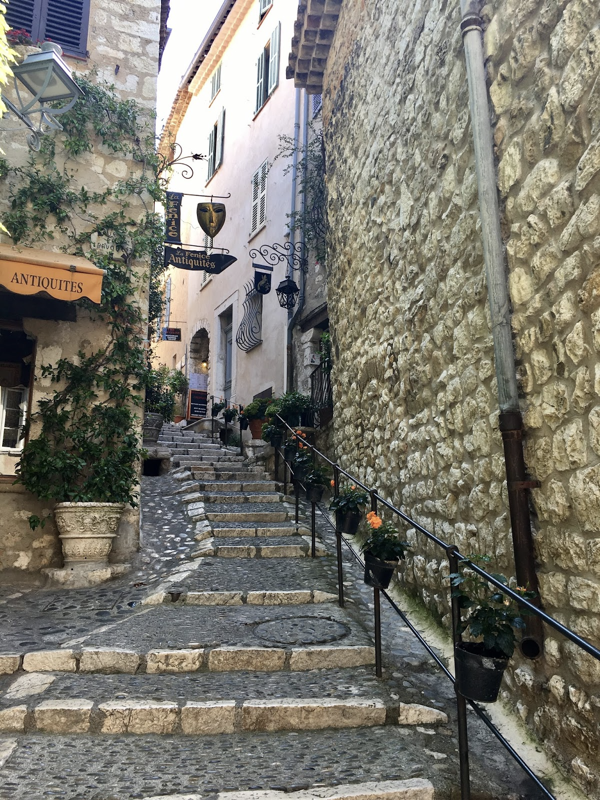
Tourrettes-sur-Loup
Not far away is another charming medieval town, quietly tucked away from the tourist beaten path, is Tourrettes-sur-Loup.
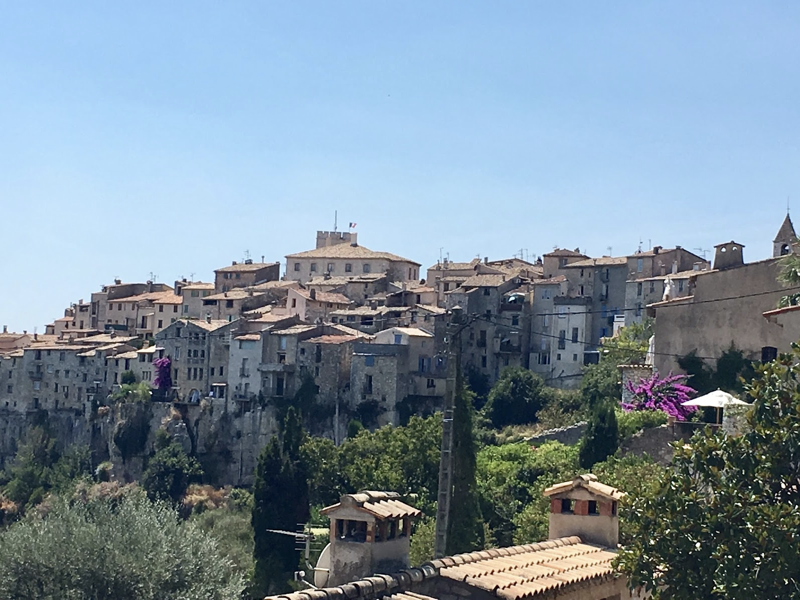
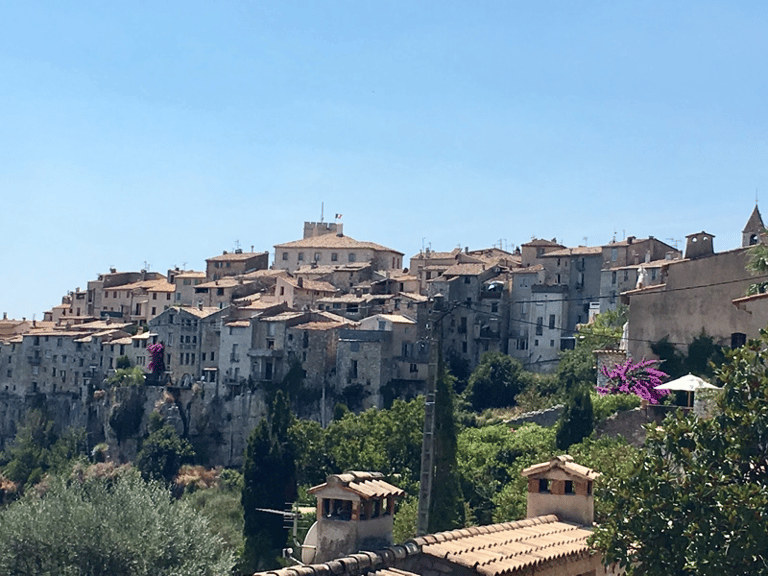
In Tourrettes-sur-Loup, our second stop of the day, we learned that the name of the town comes from all of the mini towers or “tourrettes” that dot the town’s landscape. The town itself is on a hilltop overlooking the vast valley below - home to many coyotes, or “loups”.
In between the beautiful stone exterior walls of the buildings here, the narrow streets wind their way through the town. Around each corner reveals another small cluster of shops and studios, where I found local artisans busy crafting away, and displaying their wares.
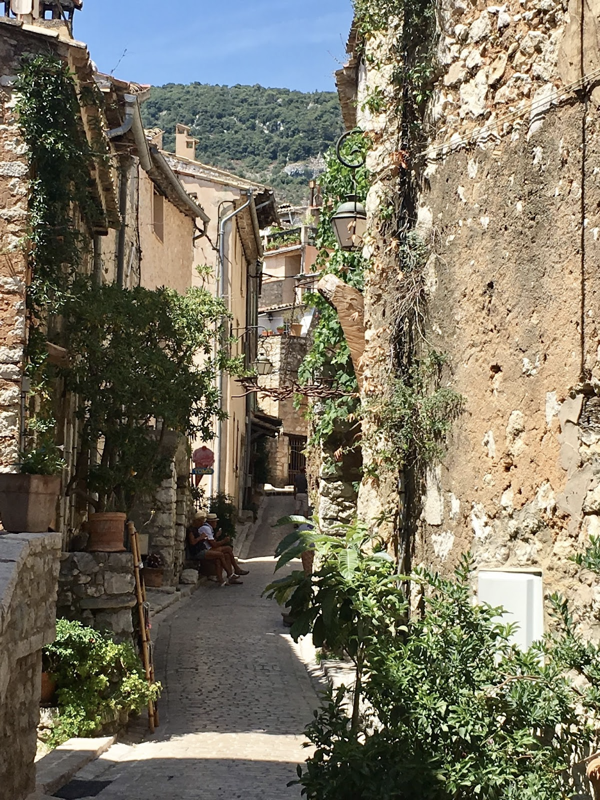
After a couple hours, we end our brief visit to Tourrettes-sur-Loup, but couldn’t leave without a few treasures. In the first photo, I captured that view of the town’s tightly clustered stone towers jutting up from the hilltop. Incredible views, and seemingly unspoiled by modern development. A true artist's inspiration, right in the middle of a Provençial paradise.
Renoir's Cagnes-sur-mer
To round out our tour, we also visited Cagnes-sur-mer, the last home of Pierre-Auguste Renoir (now a museum).
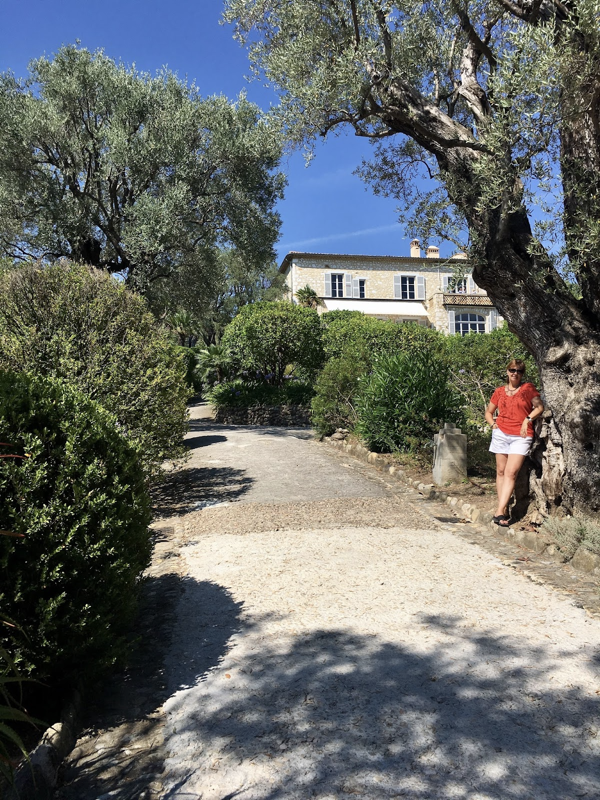
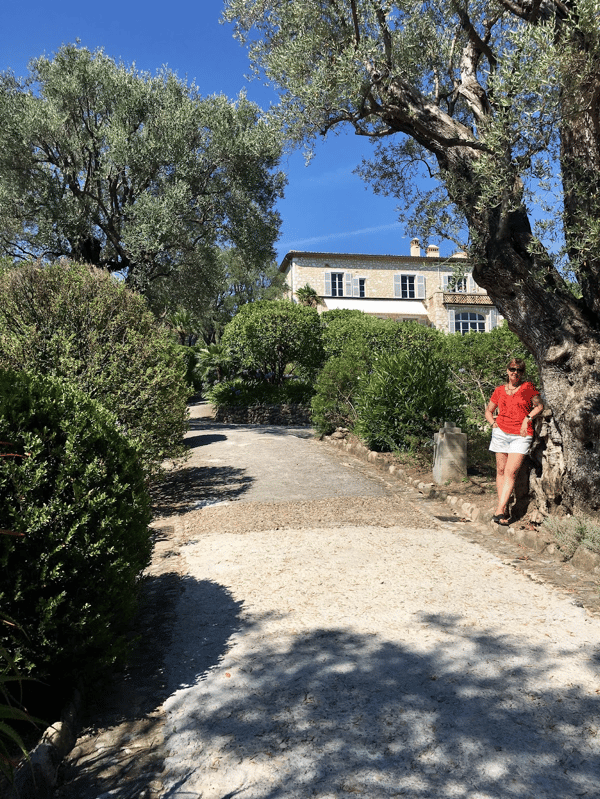
I was amazed at how accessible the house and grounds were - every room of the house open to explore, displaying several of Renoir’s later works.
There were even displays of his clothing, and photographs of the Renoir family. In particular, were movie stills and photos of his son, Jean. Jean Renoir became a famous French film director who spent most of his life in California. He lived in Beverly Hills until his death in 1979.
On display: Self portrait of the painter in his studio with female model.
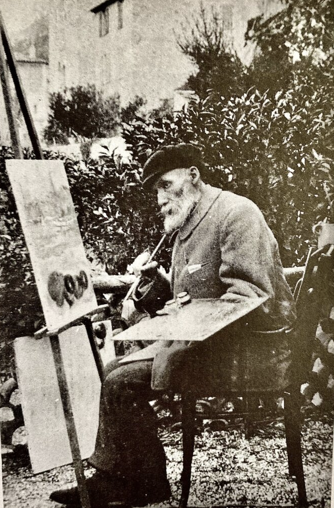
Renoir settled at Domaine des Collettes in 1908. This was his final home, here in Cagnes-sur-mer. It’s remarkable that even in his weakened condition, with arthritic hands, he continued to paint up until he died in 1919. Due to his limited joint mobility, Renoir often used a moving canvas, or picture roll, to facilitate painting large works.
Like Chagall, Renoir was one of only a few artists who saw his works displayed in the Louvre during his lifetime. In 1919, he visited there to see his paintings hanging among those of the old masters.
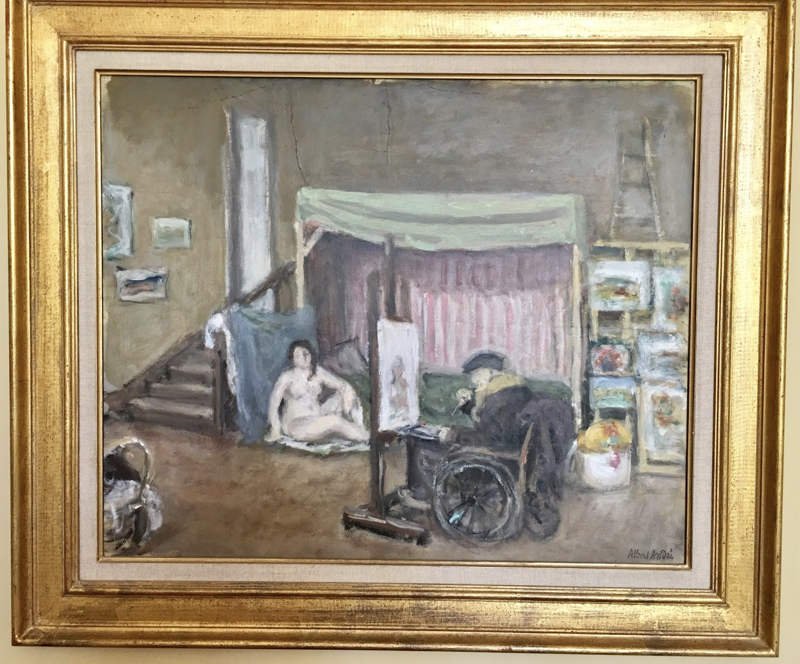
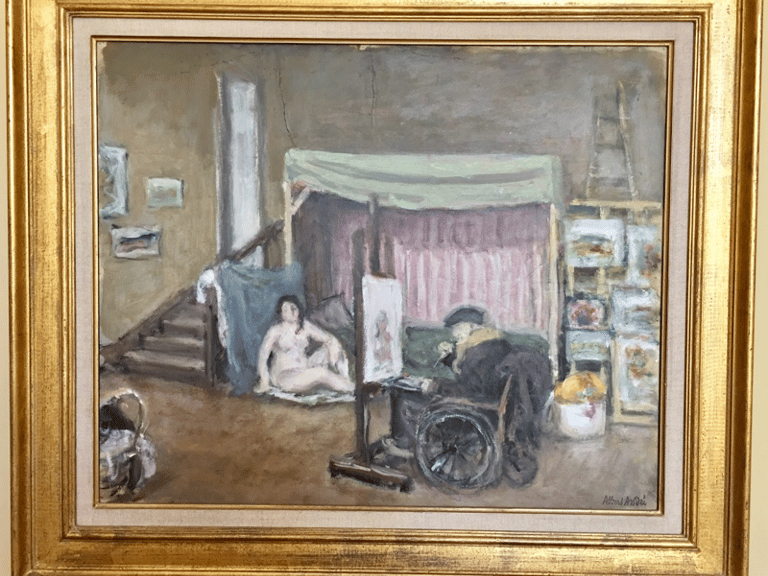
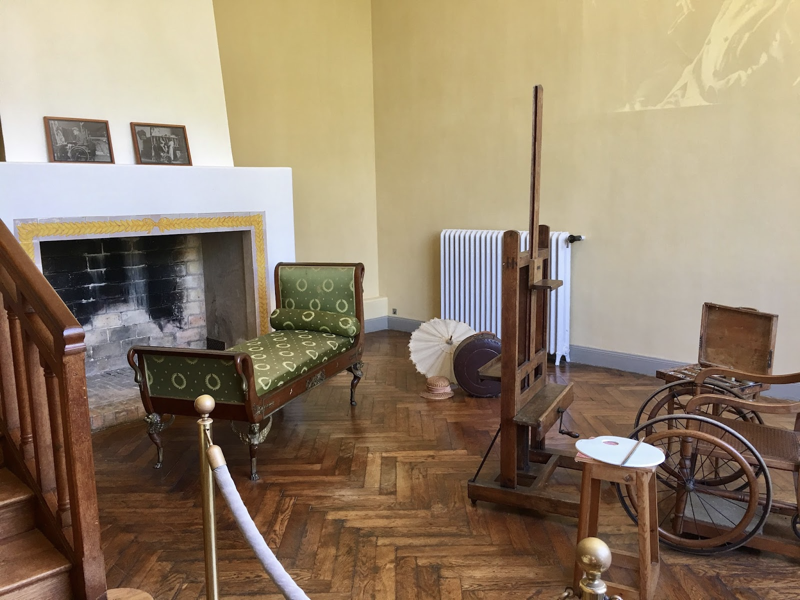
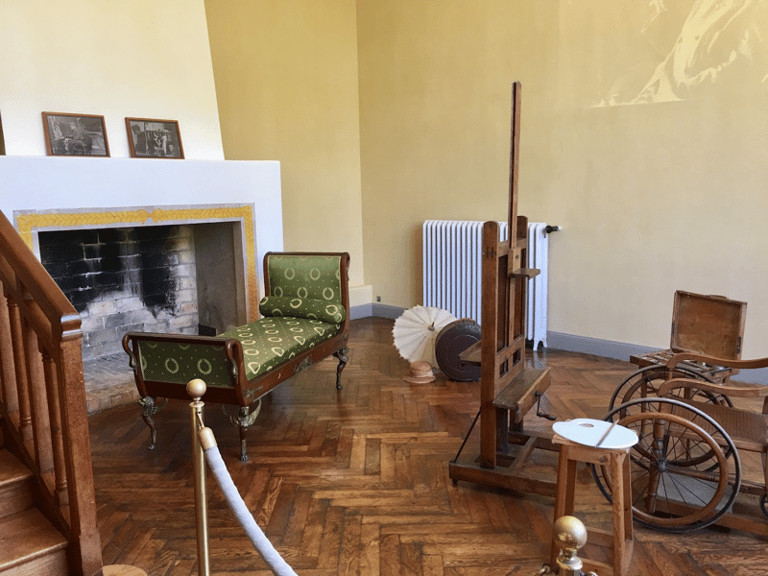
Among the many rooms, I was delighted to step into Renoir’s studio. There on display was the chaise lounge used by his many female subjects, his easel, and his wheelchair.
Renoir’s main Atelier d’Art (Art Studio).
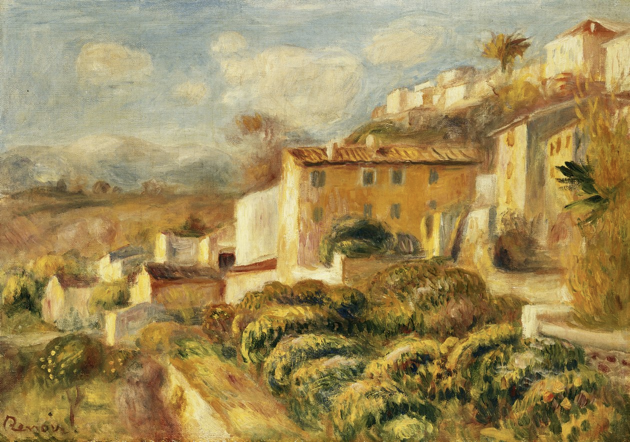
Renoir "Le Poste" - a painting of the local Postal buidling in Cagnes-sur-mer c.1900
Pierre-Auguste Renoir (1841 - 1919)
Author's Note: Musee Renoir represents a moving testimony of the creative and familiar world of the Master. Besides Renoir's original studio, the museum houses 14 original paintings, its 40 sculptures, its furniture, and its magnificient estate featuring century-old olive and citrus trees. (I bought a print here of one of Renoir's paintings of those magnificent trees which I later framed as a memento of my visit.) From the garden, you can admire an astonishing view stretching as far as the Cap d'Antibes. The trip was not only a rich education of history and artistry, but truly spectacular and unforgettable.
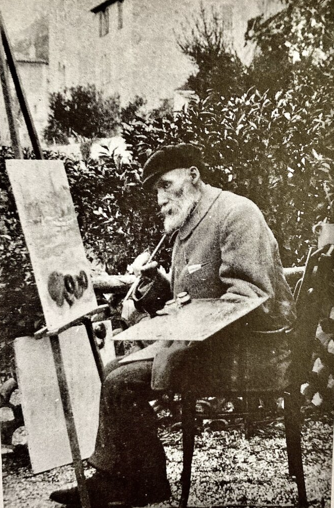
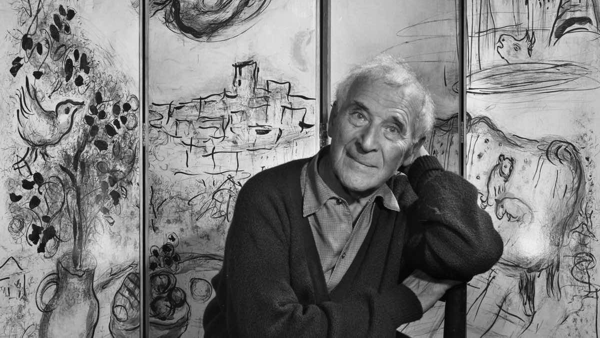
Marc Chagall (1887 - 1985)
(Photo taken 1966)
Russian-born Chagall moved to Paris in 1911 at the age of 24 and lived in the notorious artist colony, La Ruche (The Beehive), with other famous artists. While living in Paris, he was incredibly frugal yet managed to make his mark on the city. Chagall painted the ceiling of the famous Paris Opera house (Palais Garnier), and was one of the few artists to exhibit his works at the Louvre during his lifetime. He died in 1985 at the age of 97.
"Domaine des Collettes", Renoir's farm in the village of Cagnes-sur-mer, in the south of France.
Explore and roam for more.
© 2026. All rights reserved.


Created by KCJ Web Designs